Concrete Driveways in Modesto: Step-by-Step Process
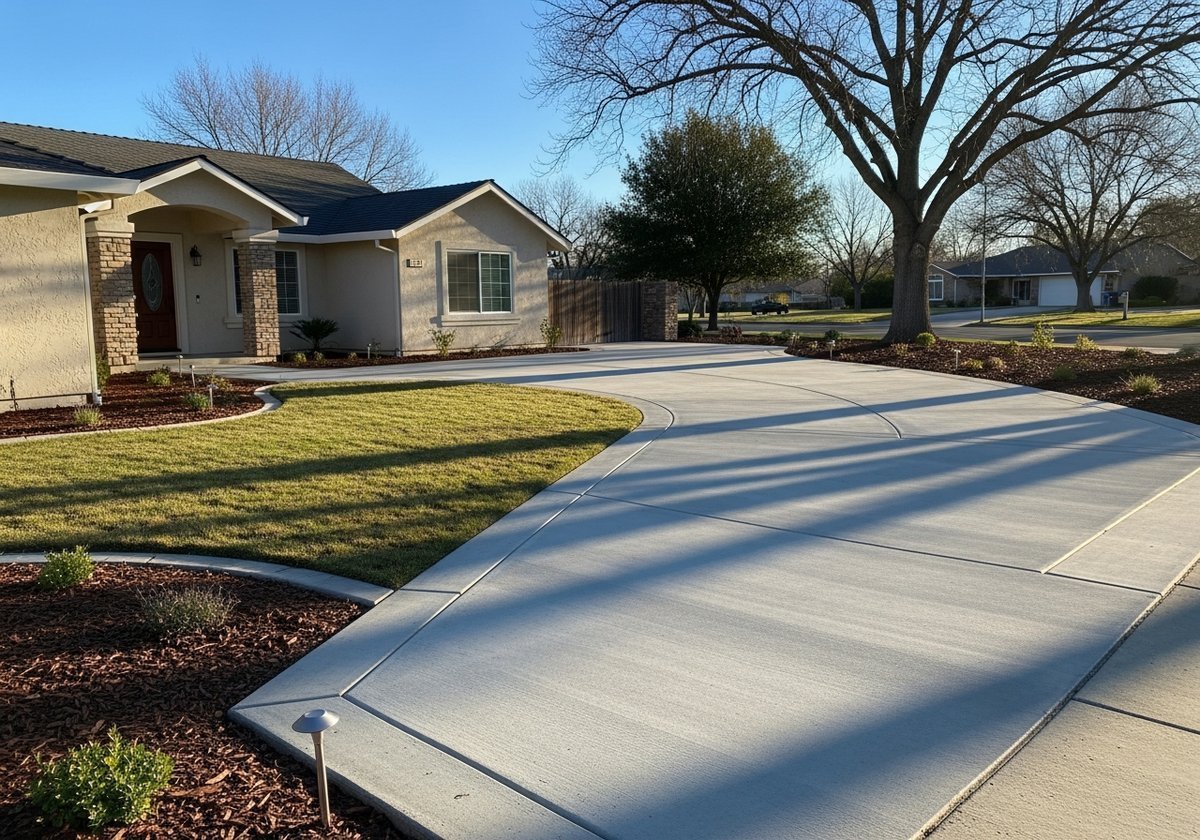
Concrete driveways in Modesto offer durability and curb appeal, but the key to a long-lasting installation lies in following a meticulous process tailored to our local conditions. From site preparation to curing, here's what homeowners in Modesto can expect when working with concrete contractors.
Step 1: Getting a quote and assessing your site
The process begins with an on-site assessment. A professional contractor will evaluate your property to determine the best approach for your driveway. In Modesto, expansive clay soil is a common issue. This soil type swells during wet winters and contracts in dry summers, which can cause concrete slabs to crack if not properly prepared. Contractors will also consider drainage to prevent water pooling, especially in low-lying areas like parts of La Loma or Village One.
During the quote process, expect questions about the size of the driveway, the desired finish (e.g., smooth, broom, or stamped), and any additional features like decorative edges or integrated pathways. Accurate measurements and a clear understanding of your goals ensure a reliable estimate.
Step 2: Preparing the site
Proper site preparation is essential for a durable driveway. In Modesto's neighborhoods like north Modesto or the College Area, lots often require clearing existing landscaping or old concrete. Contractors will mark the driveway layout, then excavate to a depth of 8–12 inches depending on the soil type. This depth allows room for a compacted gravel base and the concrete itself.
Once excavated, the subgrade is leveled and compacted to minimize future settling. Without this step, expansive clay soil could cause uneven slabs or cracks. High-quality contractors also install a gravel base, which improves drainage and adds stability.
Step 3: Installing forms and reinforcement
Wooden or steel forms are set up to outline the driveway's shape and ensure straight edges. In Modesto, where hot summers can cause concrete to expand, forms are carefully measured to allow for control joints and expansion gaps. These features prevent unsightly cracks and ensure the longevity of your driveway.
Reinforcement is another critical step. Contractors typically use rebar or wire mesh to strengthen the slab, especially in areas prone to soil movement. For driveways in Village One or downtown Modesto, where traffic loads might be higher, reinforcement ensures the surface can handle daily wear and tear.
Step 4: Pouring the concrete
Once the site is prepped and reinforced, the concrete pour begins. In Modesto, contractors often use a mix tailored to withstand our region's temperature extremes. The mix must strike the right balance between strength and workability for a smooth finish.
The concrete is poured in sections, then leveled using screeds and floated to remove air pockets. Contractors work quickly during this phase, as Modesto's summer heat can cause concrete to set faster than expected. On very hot days, additives or water sprays may be used to slow the curing process and ensure a uniform finish.
Step 5: Finishing the surface
After leveling, the surface is finished according to your chosen design. A broom finish is popular in Modesto for its slip resistance, while homeowners in neighborhoods like La Loma often opt for decorative stamped patterns to mimic stone or brick. Smooth finishes are less common due to their tendency to become slippery when wet.
Contractors will also cut control joints at this stage. These joints guide cracks to form along predetermined lines rather than randomly across the slab. For Modesto's expansive soils, control joints are particularly important to maintain the driveway's appearance and function.
Step 6: Curing the concrete
Proper curing is the final key to a durable driveway. In Modesto, curing is especially critical due to the hot summers and wet winters. Contractors typically recommend keeping the surface moist for the first 7 days to prevent premature drying and cracking. This can be done using curing blankets, plastic sheeting, or periodic water sprays.
Most driveways are ready for light foot traffic within 48 hours, but vehicles should stay off the surface for at least 7 days. Full curing — reaching maximum strength — takes about 28 days. During this time, it's important to avoid heavy loads or sharp impacts that could damage the surface.
How long does the entire process take?
From the initial quote to a fully cured driveway, the process typically takes about 7–10 days, depending on the weather and the project’s complexity. Rainy winters in Modesto can extend the timeline, while summer projects may move faster with optimal curing conditions. Your contractor will provide a detailed schedule tailored to your project.
How much does a concrete driveway cost in Modesto?
| Driveway size | Estimated cost range |
|---|---|
| Small driveway (400 sq ft) | $3,200 – $6,000 |
| Medium driveway (600 sq ft) | $4,800 – $9,000 |
| Large driveway (800 sq ft) | $6,400 – $12,000 |
| Per square foot | $8 – $15 |
These ranges include site prep, materials, labor, and finishing. Custom designs or extras like stamped patterns will increase costs.
Why Modesto soil and climate matter
Modesto's unique soil and climate require extra care when installing concrete driveways. Expansive clay soil needs thorough preparation and reinforcement to prevent cracking. Additionally, the city's hot, dry summers can accelerate curing, while wet winters demand proper drainage to avoid water damage. Working with a local contractor who understands these challenges ensures a long-lasting finish.
Frequently asked questions
How much does a concrete driveway cost in Modesto?
Concrete driveways in Modesto cost $8–$15 per square foot. The total depends on size, finish, and site conditions like soil preparation.
How long does it take to install a concrete driveway?
Most projects take 7–10 days from site prep to curing. Weather conditions, such as Modesto's rainy winters, can affect the timeline.
What finish options are available for concrete driveways?
Popular finishes in Modesto include broom (for slip resistance), smooth, and stamped designs that mimic stone or brick.
Why are control joints important for concrete driveways?
Control joints guide cracks to form along planned lines, which is crucial for Modesto's expansive clay soils that can cause slabs to shift.
How do Modesto's summers affect curing?
Hot weather can accelerate curing, so contractors may use water or curing blankets to ensure the concrete sets evenly and avoids cracking.